





Pushing Boundaries
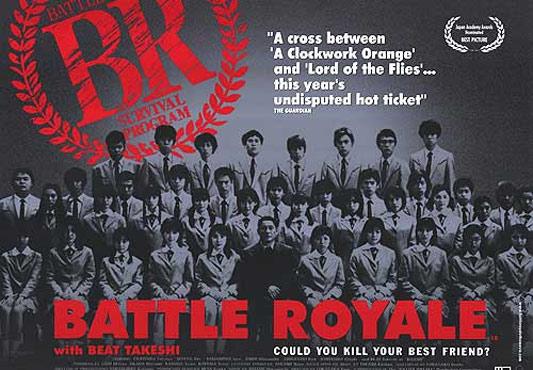
In a world where survival of the fittest is the rule, the Japanese movie Battle Royale (2000) takes this concept to the extreme. This thrilling film is based on a dystopian future in which the government selects a group of high school students and forces them to fight to the death on a deserted island.
Battle Royale is a cinematic masterpiece that pushes boundaries in terms of violence, storytelling, and social commentary. Here we will dive deeper into the film and explore why it’s an important piece of cinema worth watching.
Watch or Listen to This Episode & Others as Podcasts
Introduction to Battle Royale
Released in 2000, Battle Royale is a gripping and boundary-pushing film that captivated audiences with its unique storyline and intense action sequences. Directed by Kinji Fukasaku, this Japanese cult classic takes viewers on a thrilling journey into a dystopian future where a group of high school students are forced to participate in a deadly game.
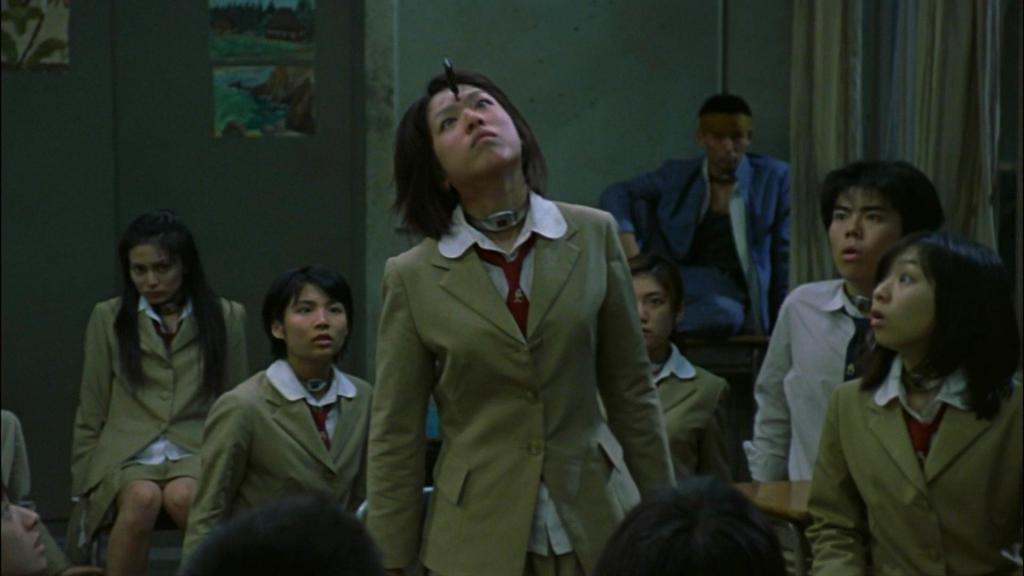
The film is set in an alternate reality where the government enforces the Battle Royale Act, a brutal policy that selects a randomly chosen class of students and transports them to a deserted island. Once there, they are given a simple yet terrifying ultimatum: kill or be killed. Armed with a variety of weapons and limited supplies, the students must engage in a ruthless battle until only one survivor remains.
What sets Battle Royale apart from other films of its genre is its unapologetic exploration of themes such as violence, survival, and the darker aspects of human nature. The movie delves deep into the psychological and emotional impact of being thrust into a life-or-death situation, examining how individuals react under extreme pressure and the lengths they are willing to go to ensure their own survival.
Fukasaku’s skillful storytelling and masterful direction create a tense and suspenseful atmosphere throughout the film. The action sequences are choreographed with precision, showcasing the raw intensity of the battles and the raw emotions experienced by the characters. Combined with a hauntingly atmospheric soundtrack, Battle Royale immerses viewers into its bleak and unforgiving world, leaving a lasting impression long after the credits roll.
Despite the initial controversy surrounding its release, Battle Royale has gained a loyal and dedicated following over the years, becoming a cult classic among fans of intense and thought-provoking cinema. Its impact on popular culture is evident, inspiring numerous adaptations, references, and even influencing the creation of similar “battle royale” scenarios in various forms of media.
Overview
“Battle Royale” (2000) is a riveting film that pushes boundaries and takes audiences on a thrilling ride from start to finish. Set in a dystopian future, the story unfolds in Japan where the government enforces a disturbing program known as the Battle Royale Act.
The plot centers around a class of high school students who are randomly selected and sent to a secluded island. Here, they are forced to participate in a sadistic game of survival. The rules are simple yet horrifying – the students must fight to the death until only one remains standing. Each student is given a bag containing a random weapon or tool, ranging from firearms to mundane household items. They are then left to navigate the treacherous landscape, filled with danger and uncertainty.
As the students grapple with the grim reality of their situation, alliances form and friendships are tested. The film delves deep into the psyche of these young characters, exploring their motivations, fears, and the lengths they will go to survive. Intense action sequences punctuate the narrative, showcasing the brutality and desperation that ensues in this deadly game.
Director Kinji Fukasaku masterfully captures the tension and chaos of “Battle Royale,” creating a visually stunning and emotionally charged cinematic experience. The film’s gritty atmosphere and visceral violence push the boundaries of storytelling, challenging audiences to confront uncomfortable truths about human nature and the lengths people may go to in extreme circumstances.
“Battle Royale” is more than just a thrilling action film; it offers thought-provoking social commentary, addressing issues such as youth rebellion, government control, and the fragility of societal norms. It serves as a cautionary tale, forcing viewers to question the limits of human morality and the consequences of unchecked power.
With its gripping plot, dynamic characters, and thought-provoking themes, “Battle Royale” stands as a landmark film that continues to captivate audiences and ignite discussions long after its release. Strap yourself in for a rollercoaster of emotions and prepare to be both shocked and captivated by this daring cinematic masterpiece.
Profile

- Movie: Battle Royale
- Romaji: Batoru Rowaiaru
- Japanese: バトル・ロワイアル
- Director: Kinji Fukasaku
- Writer: Koushun Takami (novel), Kenta Fukasaku
- Producer: Kenta Fukasaku, Kinji Fukasaku, Kimio Kataoka, Chie Kobayashi, Toshio Nabeshima, Masumi Okada
- Cinematographer Katsumi Yanagijima
- Release Date: December 16, 2000 / November 20, 2010 (Battle Royale 3D)
- Runtime: 114 Min.
- Genre: Award Winning-Action / Death Game / Award Winning-Suspense-Thriller / Best Film-Movie of the Year
- Distributor: Toei
- Language: Japanese
- Country: Japan
At the dawn of the new millennium, Japan is in a state of collapse. Unemployment is endemic and school violence is out of control. The beleaguered government retaliates with Battle Royale… Each year, a randomly chosen class is pitted against itself on an abandoned island in a cruel game of survival. The rules of the game are simple:
1) it lasts three days;
2) Each player starts with food, water, and a “weapon”
3) if more than one player survives, everyone dies (by detonating special electronic necklaces
4) there is no escape.
As the game progresses, terror and panic challenge the students’ fragile trust in each other. But despite the game’s brutality, the adolescent players remain obsessed with their crushes, their petty grudges – and their dreams…
-AsianWiki
The Unique Concept
One of the most intriguing aspects of Battle Royale is its unique concept that pushes the boundaries of traditional storytelling. The film presents a dystopian future where a group of high school students are forcibly taken to a remote island and forced to participate in a deadly game. Their objective? To kill each other until only one survivor remains.
This concept alone sets Battle Royale apart from other films in the thriller genre. It delves into the darkest corners of human nature, exploring themes of survival, morality, and the lengths people will go to protect themselves. The film raises thought-provoking questions about the nature of power, authority, and the value of human life.
What makes Battle Royale even more fascinating is the way it tackles these complex themes within the context of a pulse-pounding action thriller. The intense action sequences and suspenseful moments keep viewers on the edge of their seats, while also prompting them to reflect on the deeper implications of the story.
Moreover, Battle Royale challenges conventional notions of heroism and villainy. As the students are pitted against each other, viewers are forced to confront the blurred lines between right and wrong, as well as the gray areas of morality that emerge in extreme situations. This moral ambiguity adds an extra layer of depth to the film and makes it a truly thought-provoking viewing experience.
In breaking down the unique concept of Battle Royale, it becomes clear that this film is not just another run-of-the-mill thriller. It is a bold exploration of human nature, societal norms, and the boundaries of storytelling. With its gripping plot, unforgettable characters, and thought-provoking themes, Battle Royale has rightfully earned its place as a thrilling film that pushes boundaries.

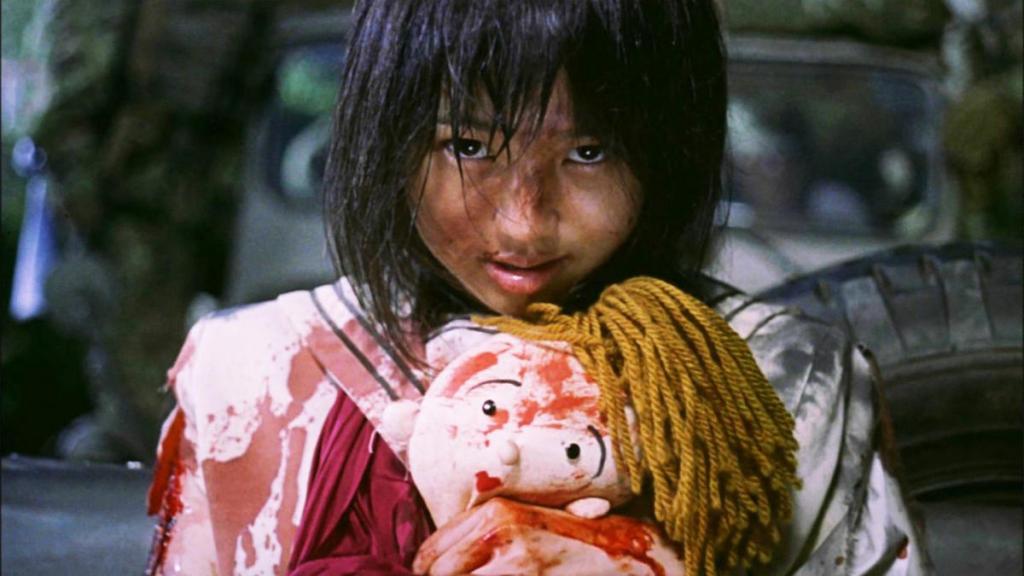
Lou gives this controversial masterpiece 4 sets of horns


Themes and Social Commentary
“Battle Royale” (2000) is a film that goes beyond its thrilling action and intense survival storyline. It delves deep into various themes and offers thought-provoking social commentary that pushes boundaries and challenges societal norms.
One prominent theme explored in the film is the corrupt nature of authority and the abuse of power. Set in a dystopian future, the government enforces a disturbing program where a class of students is randomly selected to participate in a battle to the death. This brutal game serves as a metaphor for the oppressive control exerted by those in positions of authority. As the students are forced to confront their own mortality and fight for survival, the film raises questions about the lengths people are willing to go to maintain power and control over others.
“Battle Royale” also tackles the complexities of human nature and the thin line between civilization and savagery. When faced with extreme circumstances, the characters are pushed to their limits, revealing both the darkest and most noble aspects of their personalities. The film explores the moral dilemmas that arise when individuals are forced to make life-or-death decisions and the inherent instinct for self-preservation that can override empathy and compassion.
Additionally, the film examines the impact of societal pressures on the younger generation. The students in “Battle Royale” are portrayed as victims of a society that has failed to protect them. Their participation in the deadly game reflects the pressures and expectations placed upon them by an adult world that has become desensitized to violence. The film raises questions about the consequences of adult neglect and the toll it takes on the emotional well-being of young people.
“Battle Royale” is an audacious and thought-provoking film that pushes boundaries through its exploration of themes and social commentary. By challenging the audience to confront uncomfortable truths about power, human nature, and the impact of societal pressures, it elevates itself beyond mere entertainment and becomes a compelling piece of cinema that lingers in the mind long after the credits roll.
Still a Thrill
Battle Royale (2000) remains a truly thrilling film that pushes boundaries and captivates audiences even two decades after its release. This Japanese cult classic, directed by Kinji Fukasaku, presents a dystopian world where a group of high school students is forced to participate in a deadly game of survival.
What sets Battle Royale apart from other similar films is its unapologetic exploration of dark themes and its relentless portrayal of violence. The movie fearlessly challenges societal norms and raises thought-provoking questions about the nature of humanity, the corrupting influence of power, and the ethics of survival.
The intense action sequences and the visceral portrayal of the students’ struggle for survival keep viewers on the edge of their seats throughout the film. The raw emotions and complex character dynamics provide a depth that goes beyond mere entertainment, leaving a lasting impact on the audience.
Battle Royale’s ability to push boundaries is evident in its unflinching depiction of violence and its willingness to explore controversial topics. It delves into the darkest corners of human nature, forcing viewers to confront uncomfortable truths about themselves and society as a whole.
Furthermore, the film’s underlying social commentary is as relevant today as it was when it was first released. It examines the consequences of a society that values competition above all else and highlights the destructive effects of unchecked authority.
Despite being a controversial film upon its release, Battle Royale has gained a dedicated following and has become a cult classic. Its influence can be seen in subsequent films and media that explore similar themes of survival and societal critique.
In conclusion, Battle Royale (2000) remains a thrilling and boundary-pushing film that continues to captivate audiences with its bold storytelling, intense action, and thought-provoking themes. It is a testament to the power of cinema to challenge conventions and provoke meaningful discussions.




Leave a Reply